English



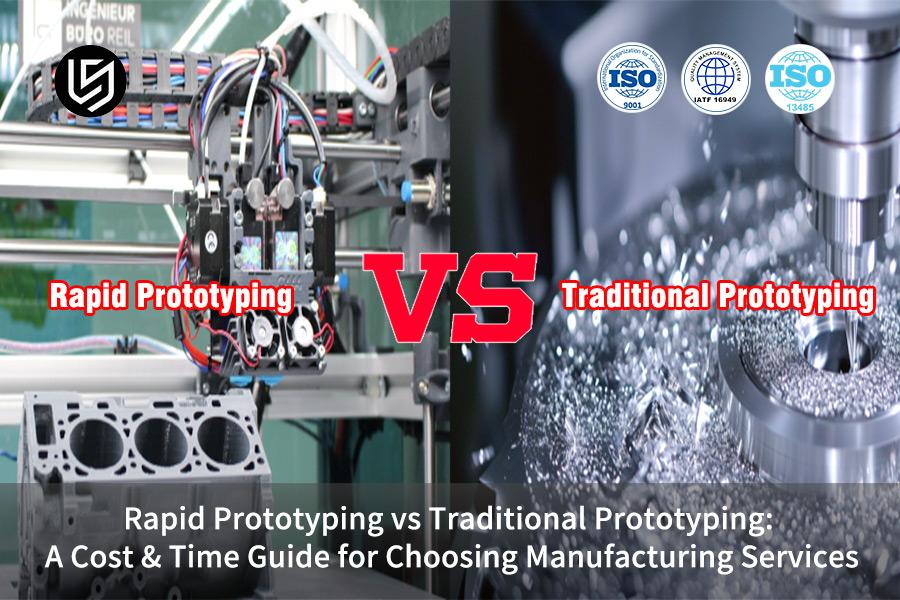
Rapid prototyping vs traditional prototyping is a major decision point at which teams typically suffer very expensive trade-offs between speed and quality. For instance, if a 3D-printed nylon part is rushed just for the sake of getting it quickly, it will most likely be too weak and fail a functional test, thus wasting weeks of verification. On the other hand, going for a "real" but costly soft, tooled casting means that the money will be locked in non-changeable designs, thus putting the whole project at risk budget, wise.
What we offer is beyond just comparing standalone unit costs and quoted lead times. Based on the data of 426 projects, we reveal the total validation cost and actual time-to-market. We give you the performance boundaries, true cost curves, and lead time breakdowns so that all your prototype decisions not only help make the final product successful but also keep the costs under control.
Rapid Prototyping VS Traditional Methods: Decision Guide
| Decision Factor | Key Difference & Implication |
| Speed to First Part | Rapid Prototyping: Typically can make a prototype in a matter of hours or days. Traditional (e.g., CNC): Usually takes days or even weeks for the final part. Both iteration speed and time, to, market get highly affected by this factor. |
| Initial Cost per Part | Rapid Prototyping: Usually cheaper if it is a complex, single piece. Traditional: One-off parts can be very expensive due to the need for setup and programming. |
| Material & Mechanical Fidelity | Traditional (CNC Machining): Gets you the right mechanical properties as it uses production, grade materials. Rapid Prototyping: Frequently the material properties used in prototyping are different from those in final production. |
| Surface Finish & Tolerance | Traditional: Normally you get a better surface finish and the tolerances are tighter, more predictable. Rapid Prototyping: Because of the layer lines or stair, stepping, sometimes you have to do post-processing. |
| Design Flexibility Cost | Rapid Prototyping: Change of design costs are pretty much nil as it is all digital files. Traditional: Change of design usually means new tooling and new programming, therefore, it also means more cost. |
| Best Application Fit | Rapid Prototyping is great for: Visual/fit checks, complex free form shapes, early, stage concept verification. Traditional is great for: Functional testing, fatigue testing, and parts that need a certain type of material. |
| Our Hybrid Strategy | We look at what your prototype is meant for and then we decide on the best single method or a combination of methods (for example, RP for shape, CNC for functional test parts). |
| Result: Optimal Fidelity | Allows the prototype technique to be aligned with the testing goal so that the right information is obtained at the right stage of product development. |
| Result: Development Efficiency | It's possible to shorten the design cycle time by cleverly exploiting the virtues of each method, thereby saving money and overall time to a production, ready design. |
We settle the issue of process selection between rapid prototyping and traditional prototyping. We evaluate your exact aims for instance, whether it is form, fit, or function and suggest the best method or a hybrid approach. The end result is that you receive the most useful prototype at each step, thereby maximizing learning, keeping costs low, and speeding up your development schedule.
Why Trust This Guide? Practical Experience From LS Manufacturing Experts
We are not theorists but practitioners of rapid prototyping. For more than ten years our workshop has been dealing with the challenges of prototyping in the real-world in the field of aerospace, medical devices, and automotive, where prototyping errors can slow down the arrival of critical innovations. Our work is based on direct experience and we comply with the Metal Powder Industry Federation (MPIF) standards to make sure each prototype is able to withstand the rigorous demands, which we have learned the hard way, through our experiments with materials and process optimization, which were quite costly.
Cost and time are the two main determining factors when comparing rapid versus traditional prototyping. Rapid methods such as 3D printing drastically reduce lead times but may necessitate compromising on the material, whereas traditional CNC delivers precision albeit with more time spent. Following SAE International protocols, we have developed methods for both alloys and polymers that strike a balance between efficiency and quality through multiple rounds of trial and error in projects with high risks.
We base our knowledge on the delivery of thousands of prototypes: making the right decision of processes for Inconel or composites, keeping the budgets under control during the rapid iterations. We share with you our battle-tested solutions so that you can avoid the same mistakes. Thus, the choice of your method, whether rapid or traditional, will be oil, chips, and real, world validation, not just textbook theory.
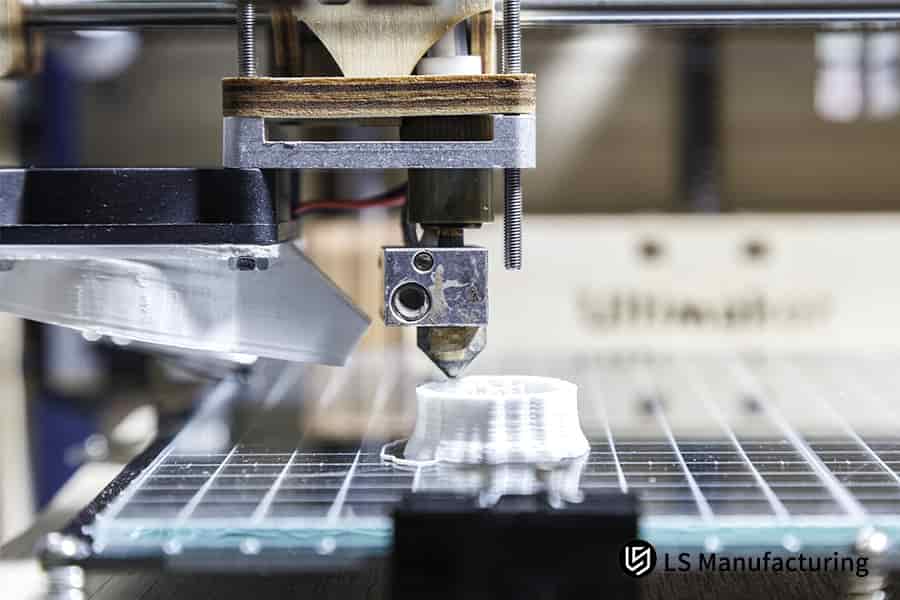
Figure 1: Extruding white plastic filament via rapid prototyping for product design verification and method selection.
At What Batch Size Do The Unit Cost Of Rapid Prototyping And Traditional Prototyping Overlap?
Selecting the best prototyping method is very important for the efficiency of research and development. This technical brief offers a data-driven prototyping cost comparison between additive manufacturing and traditional methods, also setting out the key economic batch threshold. The work presented here, which is based on manufacturing data from our own operations, is designed to help technical decision-makers make the most of their validation budgets and schedules by providing them with useful information.
| Aspect | Rapid Prototyping (SLS Nylon) | Traditional Prototyping (Aluminum Mold Casting) |
| Process Characterization | An additive manufacturing technique ideal for on-demand rapid prototyping of complex geometries. | A formative process with high initial tooling investment, suited for higher-volume validation. |
| Primary Cost Driver | Material and machine amortization; per-unit cost is relatively batch-insensitive. | The one-time mold cost dominates, heavily influencing per-unit cost at low volumes. |
| Cost @ 5 units | Approx. ¥200/unit. | Approx. ¥1, 700/unit (Mold: ¥8, 000; Material: ¥100/unit). |
| Cost @ 50 units | Approx. ¥180/unit. | Approx. ¥260/unit. |
| Economic Crossover | The cost-effective prototyping threshold is around 15-25 units. Total cost is lower below ~20 units. | Beyond ~25 units with a frozen design, this method becomes more economical in a rapid prototyping vs traditional prototyping analysis. |
The prototyping cost comparison shows that the cost-effectiveness of the two methods cross over at 15-25 units. For low-volume rapid prototyping (less than ~20 units) with automated fabrication is the cheapest way to go. For production quantities over ~25 units with established designs, conventional tooling is the best option. If you don't know what to choose, you may waste more than 30% of your budget, which points to the importance of skilled, data-backed analyses in high-value product development situations.

How Big Is The Actual Delivery Time From "Document Issuance" To "Received For Testing"?
Early market entry can only be achieved if one drastically shortens the prototype development cycle. In this paper, we describe the approach we used to challenge the problem of long traditional prototyping lead time and how we managed to change computer, aided designs into physical, tested parts within a few days instead of weeks. Our combined effort gives us a firm time to market advantage:
Integrated CAM and Machine Synchronization
We have removed the sequential delays to allow for simultaneous design analysis and CAM programming. Our software suite arounds the CAM programming function by toolpath pre-validation with respect to the manufacturability while the CAD file is being processed, thus, the programming window is reduced to less than 2 hours with this method. This uninterrupted digital thread enables immediate machine scheduling without waiting, i.e. the CNC mill will start to cut aluminum a few hours after receiving the file which is one of the main factors contributing to our short rapid prototyping time.
Consolidated Post-Processing and Validation
Rather than splitting, secondary operations such as support removal, bead blasting, and first measurement take place simultaneously with the final machining phase. We use coordinated fixturing that makes a direct transfer possible from the machine bed to a dedicated finishing cell, thus, the part can be recovered immediately without being put in a queue. This merging has become the major factor in providing a test-ready part within 2-3 working days, our rapid prototyping services are even better.
Proactive Project Management for Flow
Our technical project managers are controlled, flow operators rather than trackers. They use project digital twin simulations to pre-allocate resources, thus they can foresee bottlenecks in material logistics or machine time. Such proactive governance, supported by data from platforms like LS Manufacturing, is the main reason why our method is 7-10 days ahead of the traditional ones and, therefore, provides the rapid prototyping solutions you can rely on.
Mitigating Iteration Lag with Digital Twins
If a design has to be changed, we use the digital twin from the first iteration. The changes are tested against the existing CAM strategy and fixture design, thus in some cases machine code can be updated directly without having to go back to long offline reprogramming or physical mold rework. Capability like this basically limits the time impact of engineering changes.
This paper highlights a quite advanced technical solution where rapid prototyping time compression is physically and digitally engineered through coordinated workflows, not just advertised. Our unique selling point is this comprehensive system that visually and actively breaks down the roadblocks, hence the real speed point to your time to market window is secured by us. We take away the complexities of ultra, fast iteration in a predictable manner.
How To Match The Optimal Prototyping Process Based On The Verification Objectives (Assembly, Function, Appearance)?
Choosing the wrong prototyping method can lead to the incorrect test results and thus, a waste of time and budget. This manual offers a clear methodology for matching the essential verification goals with the most technically appropriate process. It describes how to choose prototyping method using empirical data to make sure that the prototypes give valid conclusions for the assessment of fit, function, and form:
| Verification Goal | Recommended Process & Rationale | Key Data / Technical Basis |
| Assembly & Dimensional Fit | CNC machining (plastic/metal). It offers isotropic properties and high precision, making interference and clearance checks more reliable. | Achievable tolerance of ±0.1mm, thus avoiding cumulative errors which happen in layered rapid prototyping services. |
| Functional & Load Testing | CNC machining from production, intent material (e.g., 6061 Aluminum). This method ensures real mechanical performance that can be structurally validated. | Material properties (e.g., yield strength) correspond to the final products, whereas anisotropic 3D- printed parts have unreliable data. |
| Aesthetic & Haptic Evaluation | Vacuum casting with post-processing. It results in great surface finish and texture at a very low price for small-batch visual prototypes. | The cost of a silicone mold (~¥2, 000) is reasonable for 20-50 units; paint and texture replication help to produce market-ready prototypes. |
Our method addresses the major issue of verification goal matching by allowing processes that rely on empirical data rather than solely on availability. We make sure that prototypes produce accurate results for fit, function, or aesthetics, which is a direct way of de-risking your development cycle. This level of technical precision is what our strategic prototyping partnership is all about, giving you the authoritative guidance you need to successfully launch competitive, high-value products.
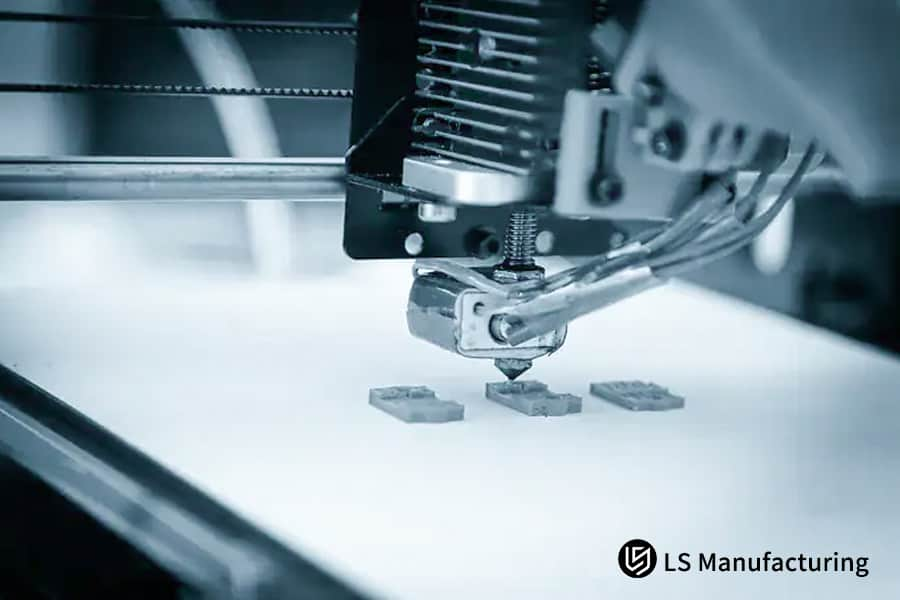
Figure 2: Producing test components with plastic filament for cost-effective rapid prototyping in product development.
When Facing Complex Design Iterations, Which Path Has A Lower "Total Cost Of Ownership"?
Prototype iteration can't be avoided but its cost can be controlled. The main challenge is to prevent very costly sunk costs from tooling that is done too early and before the design is mature. Here is a tactical methodology for holding iterative design cost down through adaptive process selection:
Dynamic TCO Modeling
- Scenario Analysis: We model total cost through multiple change cycles, comparing the cumulative expense of rapid prototyping services to the high risk of obsolete tooling.
- Data-Driven Pathing: This puts a price on the financial benefit of flexible, on-demand prototyping during the early, very changeable R&D phases.
Iteration-Locked Design Feedback
- Concurrent DFM: Every iteration has targeted manufacturability feedback to limit the change scope thus maintaining the cost efficiency of the agile prototyping workflow.
- Change Mitigation: Such a practice ensures that small changes do not turn into major, expensive reprocessing steps.
Gated Process Transition
- Objective Gates: Clear validation milestones are set as gates to facilitate the transition from iterative rapid prototyping services to capital, intensive traditional prototyping methods.
- Risk Containment: This way, a higher investment is made only after a design is stabilized, thus the project TCO (Total Cost of Ownership) is optimized.
This method changes the role of cost management from a mere estimation to an active engineering task. We offer strategic insights and adaptive prototyping solutions to overcome the challenges of development uncertainty thus making sure that investment is being used for confirmed achievement. We provide the solution to the issue of reliable budgeting in erratic design cycles.
LS Manufacturing Robotics Industry: Hybrid Process Development Project For Dexterous Hand Joint Shells
This case report describes how LS Manufacturing's hybrid prototyping approach helped to overcome a major tolerance and timeline issue in a collaborative robot end-effector project, thus enabling rapid design iteration and de-risking production. LS Manufacturing robotics case is a vivid example of how strategic process selection can lead to success in making complex components:
Client Challenge
The client working on a new dexterous gripper ran into a serious impasse. The complicated aluminum alloy joint housing which was supposed to have a bearing seat tolerance of H7 (±0.018mm) was not functionally tested. The first traditional prototyping methods of casting resulted in the failure due to the inconsistent bore geometry that causes the binding rotation. The correction of a single mold would take over 3 weeks and cost a lot of money, which would be the main reason for the stoppage of the whole product launch schedule and the loss of the market timing.
LS Manufacturing Solution
We diverted our attention to rapid prototyping services by utilizing 5-axis CNC machining. Doing so allowed us to work at a speedy tempo through the iteration cycles and precision CNC machining three revised housing prototypes in 5 days. The method gave the required material properties and the accuracy below 0.02mm to directly test the new bearing seat design and wall thickness optimizations, which is a reliable machining path before the tooling commitment of any kind.
Results and Value
The hybrid prototyping approach, CNC iteration followed by rapid tooling for 50-unit pilot batches, yielded definite results. It dropped the client's pre-production validation cost by 65% and shortened the total development timeline by 40%. The housing passed all functional tests on first mold trial, securing a very important market window and demonstrating a model of iterative design cost which is superior.
This study highlights the technical manufacturing strategies capability of executing highly complex ones. Our answer to precision at high stakes, and time challenges, is thus by the design of production on-demand systems and give our robotics clients and various other sectors a decisive digital and engineering edge in the development of complex, performance-critical parts.
Struggling with costly and slow prototype iterations for complex parts? Our hybrid strategy can accelerate your validation and reduce risk.

How To Assess A Supplier's Ability To Provide "Hybrid Routing" Recommendations?
It is critical to select the right prototyping partner to achieve the best project results. The genuine difficulty is to find a supplier who can give you impartial suggestions and who can strategically manage various processes throughout your development period. It takes a real partner to successfully complete a supplier capability assessment that is stringent and emphasize on an integrated blend of technical and advisory expertise:
Multi-Process Portfolio & Comparative Analysis
We are the ones who tell the story of our strength through running technical analysis of various solutions in parallel and actively, and not only through listing the equipment we use. After getting your idea, we prepare comparative data, cost, lead time, performance, for several processes like precision rapid prototyping services and rapid tooling. This impartial comparison is the basis of the correct how to choose prototyping method, which leads the way to both the immediate need for validation and the long-term goal of production.
Stage-Gated Technical Advisory
We are an active technical consultancy. We make feature complexity, iteration needs, and volume forecasts by milestone reviews. This helpful insight allows us to suggest strategic moves, such as conducting a functional test with a agile prototyping workflow before starting the soft tooling for pilot production. We are the ones who figure out the problem of being locked in too early to a single way of working, which may turn out to be very expensive.
Integrated Data and Quality Continuity
Any real evaluation should confirm if support for a seamless transition is possible. We hold a continuous digital thread and a quality framework that run through all the operations from the very first rapid prototyping batches to pilot production. This is the reason why no requalification waiting time comes up at the moment of a phase switch, thus the consistency is ensured, and your development schedule is safe.
This framework stipulates the formation of a strategic manufacturing partnership. We are distinct through a carefully crafted process orchestration methodology, which gives our clients the decisive advantage of development efficiency and cost control. We facilitate the entire prototyping-to-production continuum, the most complex challenge, without difficulty.
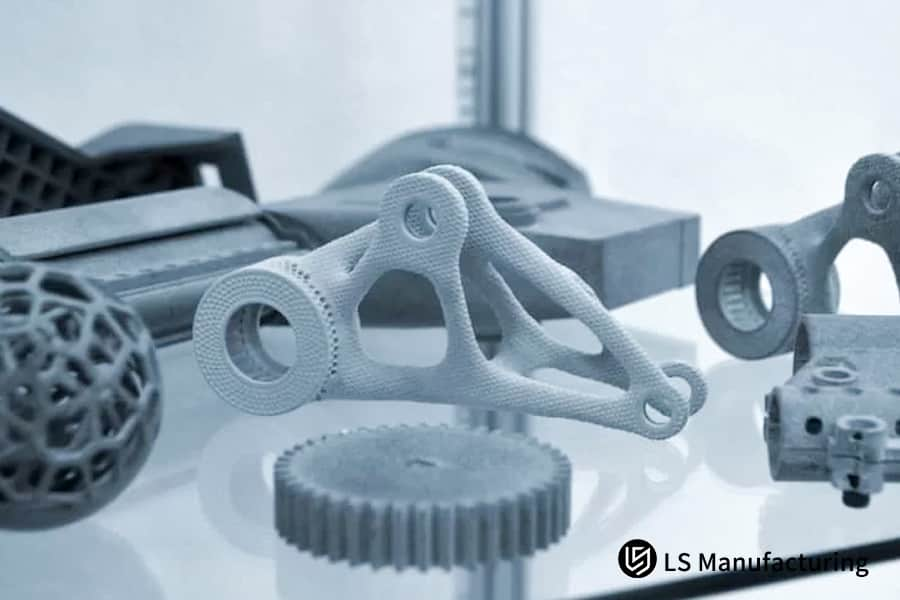
Figure 3: Displaying precision metal rapid prototype components for method comparison and service evaluation.
Why Is A "One-Stop" Prototyping Service Key To Controlling Project Risks And Communication Costs?
A complicated task of coordinating multiple specialized vendors for the production of a single prototype could easily lead to loss of control, lack of accountability and thus, increase the risk. Furthermore, a fragmented supply chain poses limitations on project risk control, cause delays in issue resolution and also, expose intellectual property. This article explains that a unified one-stop solution which through integrated process management, can directly eliminate these systemic program threats:
Eliminating Accountability Gaps
- Unified Responsibility: A single-point Technical Project Manager is responsible for the entire workflow from CAD to QC, thus, vendor-to-vendor blame shifting is eliminated.
- Closed-Loop Data Stream: Our digital thread connects design, machining, and inspection data, thus, allowing root-cause analysis in one system for the integrated prototyping workflow.
Containing Communication & Coordination Cost
- Single Interface: You only have to work with one dedicated team who knows everything down to the last detail. That keeps a low number of meetings, yet the information flow is the same for all of the rapid prototyping services.
- Unified Standards: It is a single quality management system that controls all stages, from precision machining to finishing, thus avoiding specification drift and rework.
Securing IP and Maintaining Flow
- Controlled Data Access: Your IP design is housed within our secure, audited system and never leaked to several external suppliers.
- Synchronized Scheduling: Our internal plan syncs all process steps, thus changing multi-vendor delay handoffs into a continuous, accelerated agile development path.
This combined model aims at producing deterministic results. We free the way to a smooth, accountable workflow by removing the high hidden costs and risks of multi-vendor management. Our full-cycle prototyping service functions as your dedicated technical partner, ensuring clarity, security, and velocity from concept to validation.
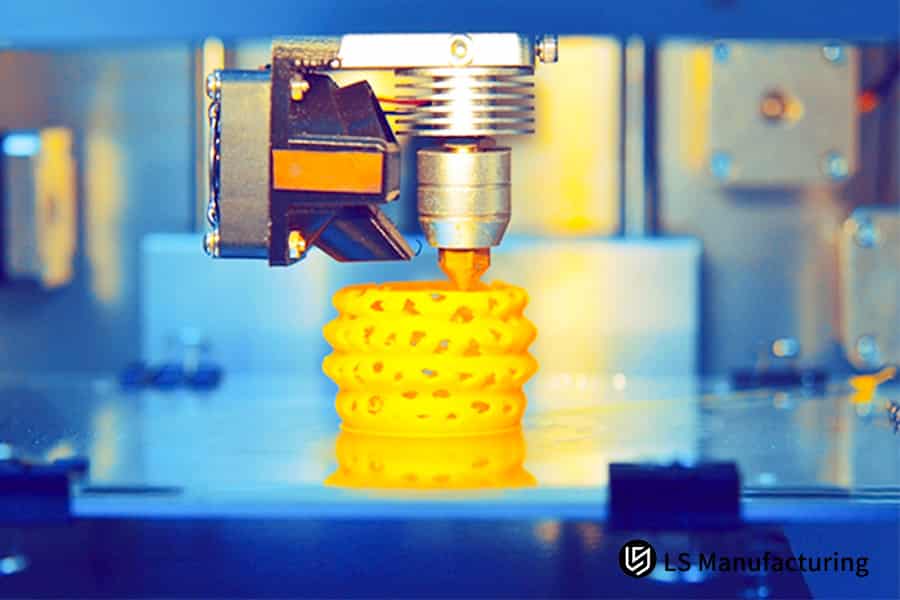
Figure 4: Demonstrating rapid prototyping with yellow plastic filament for cost-effective design verification and method selection.
FAQs
1. Which is better for prototyping: 3D printing or CNC machining?
It completely depends on what you need. 3D printing will give you a great proof-of-concept with very complicated geometries and extremely small batches (1-5 pieces), whereas CNC machining will give you a functional verification and assembly testing that require very high precision, good mechanical properties, and realistic material characteristics.
2. Can the precision of rapid prototyping parts reach mass production levels?
CNC prototype precision is more than adequate for mass production and even exceeding it (e.g., ±0.05mm). The precision and surface quality of 3D printed parts are usually inferior to mass, produced parts and mostly used for shape and fit verification.
3. If I want to produce 50-100 pieces in a small batch, which method should I choose?
This quantity is very sensitive. Total assessment of parts complexity, materials, budget, and delivery time is necessary. Normally, vacuum casting or rapid aluminum molding can give you the lowest price while CNC machining or metal 3D printing would be perfect for complex structure parts or special materials. The matter of fact, each case should be looked into.
4. Can you help me optimize the design to reduce prototyping costs?
Of course. LS Manufacturing can provide free DFM analysis. We will give you optimization proposals of your selected prototype process to help you save an average of 10-30%.
5. How do you protect intellectual property rights during the prototyping stage?
In order to secure your ideas, we sign legally binding NDAs (Non-Disclosure Agreements), all project files are saved on encrypted servers, and our staff have strict confidentiality training.
6. Do you provide post-processing for prototypes (such as painting, spraying, screen printing)?
Our post-processing services are one-stop and comprehensive. Among others, they include sandblasting, spraying, electroplating, screen printing, and the like. You will get a finished product which can be demonstrated or tested.
7. How long does it take from submitting documents to receiving a quote?
For regular requirements, we guarantee to give an initial quotation and some processing/production layout ideas within 2 working hours. Detailed evaluation of complicated parts may take 4-6 hours.
8. Is there a minimum order quantity (MOQ) limit?
When it comes to prototype services, we are able to assist you starting from an order of 1 piece; hence, there is no MOQ limit from our side. We are committed to helping your achieve your validation goals in the most cost-effective manner.
Summary
Making an informed decision between rapid and traditional prototyping is not a single set choice but rather a dynamic process considering the project phase, validation goals, quantity budget, and timelines. At the heart of the matter is knowing the real cost, time frame, and capability boundaries of each process. The most successful product development is supported by partners like LS Manufacturing who through multi-process integration are able to flexibly suggest and follow the best route to ensure maximum R&D value.
Just send your part drawings and requirements over to us. Our team of experts will give you a complimentary "Multi-Process Prototyping Solution Analysis Report" within 4 hours. The report contains an in, depth cost, lead time, and performance comparison of 2-3 solutions such as CNC machining, 3D printing, and vacuum molding, thereby helping you make the most profitable decision.
📞Tel: +86 185 6675 9667
📧Email: info@lsrpf.com
🌐Website: https://lsrpf.com/
Disclaimer
The contents of this page are for informational purposes only. LS Manufacturing services There are no representations or warranties, express or implied, as to the accuracy, completeness or validity of the information. It should not be inferred that a third-party supplier or manufacturer will provide performance parameters, geometric tolerances, specific design characteristics, material quality and type or workmanship through the LS Manufacturing network. It's the buyer's responsibility. Require parts quotation Identify specific requirements for these sections.Please contact us for more information.
LS Manufacturing Team
LS Manufacturing is an industry-leading company. Focus on custom manufacturing solutions. We have over 20 years of experience with over 5,000 customers, and we focus on high precision CNC machining, Sheet metal manufacturing, 3D printing, Injection molding. Metal stamping,and other one-stop manufacturing services.
Our factory is equipped with over 100 state-of-the-art 5-axis machining centers, ISO 9001:2015 certified. We provide fast, efficient and high-quality manufacturing solutions to customers in more than 150 countries around the world. Whether it is small volume production or large-scale customization, we can meet your needs with the fastest delivery within 24 hours. choose LS Manufacturing. This means selection efficiency, quality and professionalism.
To learn more, visit our website:www.lsrpf.com.