English



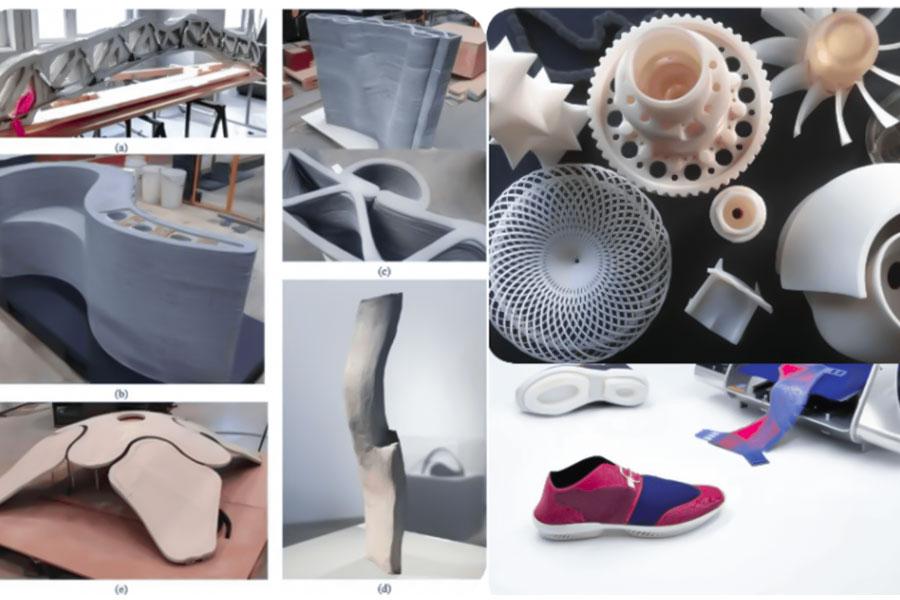
From precision parts in the manufacturing industry to creative works in the field of culture and art, from complex organ models in biomedicine to interactive tools for education and training, rapid prototyping technology is setting off a revolution in various fields with its efficiency, flexibility and accuracy. technological revolution. It allows designers and engineers to turn ideas into reality faster than ever before, accelerating the pace of innovation and promoting social progress.
This article will delve into multiple application of rapid prototyping technology and reveal its unique value and important role in different industries. By understanding these applications, we can not only understand the powerful functions of this technology more comprehensively, but also foresee its broad development prospects in future society. Let’s begin our rapid prototyping blogging journey!
What is Rapid Prototyping?
Rapid prototyping is the process of developing prototypes as quickly as possible to simulate the final product design. It is a family of techniques for modeling physical components or scale prototypes of components using CAD data.
The most popular form of rapid prototyping is called additive manufacturing (also known as 3D printing). There are many 3D printing technologies, each compatible with different materials and offering unique advantages. Other technologies that enable rapid prototyping include CNC machining, injection molding, and vacuum casting.
How Does the Rapid Prototyping Process Work?
Rapid prototyping is an efficient product development method that allows teams to quickly create testable, verifiable prototypes in the early stages of product development. The following is the rapid prototyping process:
Requirements analysis:Work closely with users or stakeholders to collect and clarify the basic needs and functional requirements of the product. Determine the goals and scope of prototype design by sorting out and analyzing requirements.
Preliminary design:Based on the results of demand analysis, conceptualize the product and form a preliminary design plan. Use hand-drawn sketches, design software and other tools to quickly draw preliminary design drawings of products.
Prototyping:Use prototyping tools or software, such as Axure RP, InVision, Marvel, etc., to quickly build digital prototyping model . If a physical rapid mockup is required, select appropriate materials and processes and produce it through 3D printing, CNC machining, hand-making, etc.
Testing and Validation:Invite target users or potential users to test the prototype and collect their feedback. Conduct functional testing, usability testing, performance testing, etc. on prototypes to ensure that the prototype meets design requirements and user needs.
Feedback and iteration:Make necessary modifications and optimizations to the rapid prototype based on test results and user feedback. Repeat the process of testing and iteration until the prototyped design achieves satisfactory results.
Delivery and Evaluation:Deliver the final prototype to the project team, client, or stakeholders for evaluation and decision-making. Summarize and evaluate the entire prototype design process to provide reference for future product development.

What Are The Applications of Rapid Prototyping?
rapid prototyping technology has a wide range of applications in practical applications,rapid prototyping examples are as follows:
- Automotive Industry:For creating scale models, testing functional parts, and design verification of components such as instrument panels, lighting systems, and engine components.
- Aerospace Industry:Used to create rapid prototype parts with complex geometries and lightweight components, often using high-performance materials.
- Healthcare and Medical Devices:Create anatomical models for surgical planning, custom prosthetics, and medical devices customized to individual patient needs.
- Consumer Electronics:Prototyping of cases, buttons and internal components for devices such as smartphones, laptops and wearables.
- Architecture and Construction: Used to create detailed scale models of buildings, bridges, and other structures for visualization and design verification.
- Fashion and Apparel:Design accessories, prototype footwear, and experiment with new materials. Education and Research: Used to create models and experimental instruments in various academic fields.
- Entertainment and Film:Prop making, costume design, and set models for visual and practical effects.
- Robotics and Automation:For prototyping of robots, automated mechanical parts, and testing of new designs.
- Sports equipment manufacturing:Designing and testing equipment such as helmets, rackets and protective gear.

What Are the Advantages of Rapid Prototyping?
1.Fast
Rapid prototyping technology accelerates product development by immediately putting digital drawings into actual production. 3D printers often have material profiles, so all that is needed is a slice file with design instructions. The 3D printer receives the sliced CAD file and generates a three-dimensional model. No machine configuration or monitoring is required, the model is generated according to the instructions in the file, usually within a few hours.
2.Automated Testing
Rapid prototyping utilizes software to automate rapid prototyping, from the modeling/drawing phase to testing and manufacturing. Using CAD/3D modeling software, you can produce 3D models using automated workflows, while AI recommendations let the software run virtual mechanical tests on parts, helping to ensure the mechanical quality of prototypes before physical testing. Automation further speeds up production times and produces complex and precise parts that would otherwise consume significant resources using traditional manufacturing methods.
3.Low Development Costs
Rapid prototyping’s streamlined workflow means lower development costs. Cost includes 3D printer, materials, and labor design time. Models fresh off the print bed can also be used with minimal post-processing, especially those made with FFF/FDM. Models made with SLA 3D printers require post-curing using UV light to turn the resin into a permanent solid. The largest cost of prototyping is configuring, maintaining and monitoring equipment, such as CNC and injection molding machines. Using 3D printing for rapid prototyping can significantly reduce costs, especially when scaling up.
4.New Testing Opportunities
Because rapid prototyping is much faster than traditional prototyping, you have more time to test materials, geometries, and production methods. For example, a part you plan to make out of polycarbonate (PC) can be made out of ABS, nylon, and PET-G, which can reduce failures and lower costs. You can also try different fill patterns to save material. Rapid prototyping can also provide engineers with physical parts the same day if they have a sudden eureka moment that solves a common design problem.
5.Discover Design Issues
One of the most overlooked benefits of rapid prototyping is its ability to detect design problems early in the production process. Getting prototypes and iterative testing early can save money and wasted materials in the long run. This is critical to making product development economically viable, as many businesses go bankrupt during the development process. Rapid prototyping also helps us estimate demand and material usage, ensuring everything runs smoothly during production.
What are the disadvantages of rapid prototyping?
1.Material suitability
3D printers cannot print wood, cloth, paper, or rock, so rapid prototyping is not suitable for producing prototypes that require these materials. Rapid prototyping is best suited for prototyping metal and plastic parts, as well as capturing other material forms. For example, a wooden sculpture can be printed in plastic to create a true-to-scale prototype that can be used as an artistic reference.
2.Not suitable for assembly
Rapid prototyping is not suitable for assemblies containing multiple parts – it is only suitable for producing a single component/model. While you can use rapid prototyping to build components part by part, you are limited by the speed at which you can print. For individual components such as casings, casings, arms, brackets and clips, rapid prototyping techniques are best used. Additionally, rapid prototyping technology doesn’t give you any idea of the strength, color, or surface finish of the final product.
3.high cost
While rapid prototyping technology provides a way to quickly prototype and save costs through design improvements, there is no denying that it is an expensive investment. On average, a commercial-grade desktop 3D printer will cost you between £5,000 and £15,000, plus you’ll need to consider materials, training, maintenance and upgrades. The question is whether this capital investment is worth it for your business. Rapid prototyping is economical at scale, and it can also work at small scale if it helps speed time to market and solve engineering challenges.

How Does Rapid Prototyping Benefit Different Industries?
Rapid prototyping has brought significant benefits to different industries by quickly iterating and optimizing products. Below is a table summarizing the applications of rapid prototyping in various fields such as automotive, aerospace, medical and consumer electronics, including specific use cases:
| Industry | Application | Example |
| Automotive | Prototyping, low-volume parts production | Automotive parts manufactured through 3D printing, such as interior parts, engine parts, etc., speed up the research and development of new models and respond to changes in market demand. |
| Aerospace | Parts manufacturing, complex structure manufacturing | 3D printed aircraft and rocket parts, such as fuel nozzles, are not only lighter but also perform better, helping to improve engine efficiency |
| Medical | Customized prosthetics, implants, surgical instruments | Customized prostheses and implants made with 3D printing technology improve treatment effects and bring better experience to patients |
| Consumer Electronics | Prototyping, customized housing | Use 3D printing technology to quickly produce prototypes of electronic products, conduct functional testing and appearance optimization, and manufacture personalized product casings |
FAQs
1.What are the applications of RP?
RP, or Rapid Prototyping technology, has a wide range of applications, especially playing an important role in high-tech and manufacturing fields such as automobiles, aerospace, medical and electronic industries. In the automotive industry, auto parts manufactured through 3D printing, such as interior parts, engine parts, etc., speed up the research and development of new models and respond to changes in market demand; in aerospace, 3D printed aircraft and rocket parts, such as Fuel nozzles are not only lighter in weight and have better performance, but also help to improve engine efficiency; in the medical field, customized prostheses and implants made with 3D printing technology can improve the treatment effect and bring better use to patients. Experience; in terms of consumer electronics, 3D printing technology is used to quickly produce prototypes of electronic products, perform functional testing and appearance optimization, and create personalized product casings.
2.What is prototyping applications?
A prototype application refers to a simplified or model version of an application created during the software development process to verify design ideas, functional requirements, and user experience. It is typically used to showcase an application's core functionality and design in order to identify issues, validate design assumptions, and gather user feedback in the early stages of development. Prototype applications can be low-fidelity, which typically uses simple lines, graphics, and text to represent interfaces and interactions, or high-fidelity, which more closely resembles the look and interactions of the final product.
3.Where is rapid prototyping used?
Rapid prototyping is widely used in multiple stages of software development and design, including: through rapid prototyping in the requirements analysis stage, developers can better understand user needs, communicate with users, and ensure accurate understanding of the requirements. understanding; in the design phase, rapid prototypes can be used to demonstrate design ideas and verify design assumptions, helping designers and developers discover potential design problems, and optimize and improve them; in the testing phase, rapid prototypes can be used to test applications function and performance, and discover potential problems and defects so that they can be repaired and improved in the subsequent development process; by displaying rapid prototypes in sales and marketing promotions, you can attract the attention of potential users, partners and investors, and improve the product. market competitiveness.
4.What are the applications of rapid tooling?
In the fields of aerospace, military industry, automobile manufacturing and other fields, high-speed cutting processing technology is widely used in the processing of large and complex thin-walled curved surface parts, which can significantly improve processing efficiency and workpiece quality. In the field of 3D printing and additive manufacturing, rapid prototyping technology is used to quickly manufacture prototypes or parts of products for verification and optimization. In non-metal processing industries such as wood craft engraving and plastic mold processing, rapid processing technology is also widely used, which can significantly improve processing efficiency and product quality.

Summary
Rapid prototyping technology has broad application prospects and important value in the fields of automobiles, aerospace, architecture and construction, fashion and apparel, entertainment and movies, robotics and automation, sports equipment manufacturing, medical and electronic industries. It can not only help companies and teams accelerate product development processes, improve product quality and reduce market risks, but also promote technological innovation and industrial upgrading. With the continuous development of technology and changes in the market, rapid prototyping will be applied and promoted in more fields, injecting new vitality and power into the development of manufacturing and all walks of life. With the continuous development and improvement of technology, rapid prototyping technology will be promoted and applied in more fields, making greater contributions to human technological progress and social development.
Disclaimer
The content on this page is for reference only.Longshengdoes not make any express or implied representation or warranty as to the accuracy, completeness or validity of the information. No performance parameters, geometric tolerances, specific design features, material quality and type or workmanship should be inferred as to what a third party supplier or manufacturer will deliver through the Longsheng Network. It is the responsibility of the buyerseeking a quote for partsto determine the specific requirements for those parts.Pleasecontact usfor moreinformation.
Longsheng Team
This article was written by multiple Longsheng contributors. Longsheng is a leading resource in the manufacturing sector, withCNC machining,sheet metal fabrication,3D printing,injection molding,metal stamping, and more.